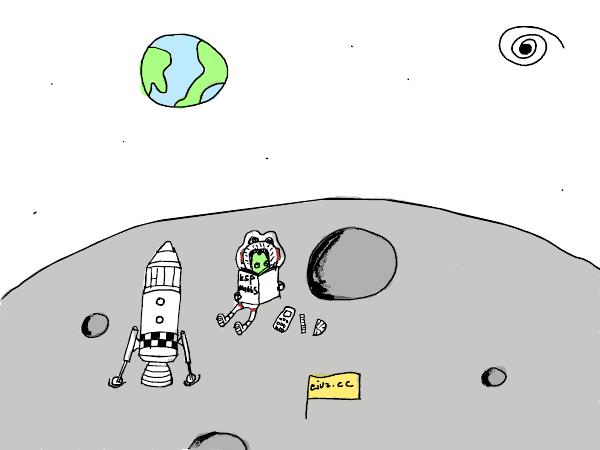
This is a series that I have been thinking about doing ever since learning properly about orbital mechanics in my first year of university. Now, I’ve finally got around to doing it.
I have always been a big fan of Kerbal Space Program. In fact, I can pretty confidently say that, without its influence, I most likely wouldn’t have gone down the path in life that I have. The fascinating, analytical and tense (yet also light-hearted and silly) nature of the game made for a great outlet for somebody who loved the ideas of space travel and rocket science, but didn’t quite have the necessary educational toolkit to understand what was going on properly. Looking back now, I always think it is fun to see how much I accidentally discovered on my own.
Many years, and hundreds of hours in game, later, I finally do possess a good chunk of the tools required to fully (at least I hope!) understand what was actually going on for all those years. This is my attempt at collecting those newfound thoughts and publishing them for anybody else who wants to follow on some of the journey that I’ve embarked on for the last decade or so.
Motivation: Why I Finally Decided To Do This
I have always marvelled at, when you stop to think about it, how well designed KSP really is, in the sense that the level of detail I intend to go into in these articles is largely unnecessary. The game provides you with just enough problems to solve that you never get the impression that spaceflight is easy (per-se) and so that engineering choices you make do have an impact, but holds your hand just enough that somebody with GCSE level physics can understand what’s going on. In a similar vein, the real world complexities that it chooses to leave out (for instance propellant sloshing or the requirement for life support or combustion instability effects - this list goes on) serve well to ensure that the game provides problems to solve, but doesn’t overwhelm the player with the large number of genuinely hard problems that rocket science and engineering contain in reality.
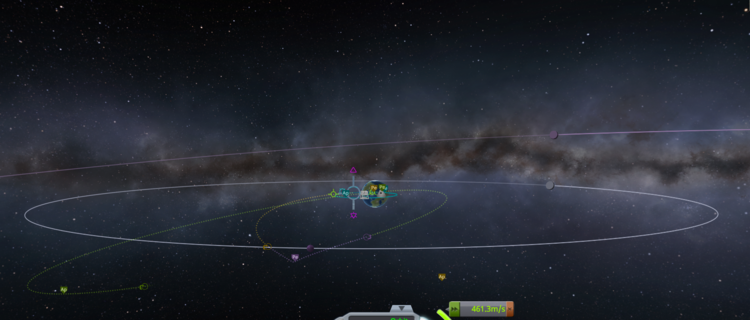
"Legrange multipliers? Optimal transfer windows? Calculus of variations? I just hit the manoeuvre planning button and play with it until it works!"
However, it would be quite short sighted to ignore the vastness of the topics hinted at by the game, even in the fleeting glimpse it gives us. Although the game is a deliberate simplification, it is also an excellent introductory tool to intuit the topics involved in rocket science and orbital mechanics, before we make it more complicated and less intuitive. You really feel the diminishing returns of the rocket equation when you strap ten more fuel tanks on, only to gain 20 extra Delta-V. In this way, the game is really quite accurate.
At its core, I think that KSP is an excellent device for “springboarding” off and for introducing more advanced and interesting concepts in physics and mathematics.
What This Series Is
This series is an in-depth dive into the mathematical background of Kerbal Space Program - encompassing the dynamics of rockets (their stability, their motion etc.), orbital mechanics, control theory and more.
Although I’m using KSP as a device to explore general topics in aerospace engineering and astrophysics, I won’t be shying away from exploring them fully. Limitations imposed in the game won’t be limiting our discussion here.
What This Series Is Not
This is not a KSP tutorial, nor is it a rocket design guide. Although we will be discussing the derivation/motivation behind the various tools and approximations engineers use, we won’t be making much practical use of them, besides arriving at conclusions regarding how our results should be employed in design.
We’re also going to be sticking to relative realism wherever possible: no game exploits or the like. We’re going to be playing by the spirit of the game, not to win.
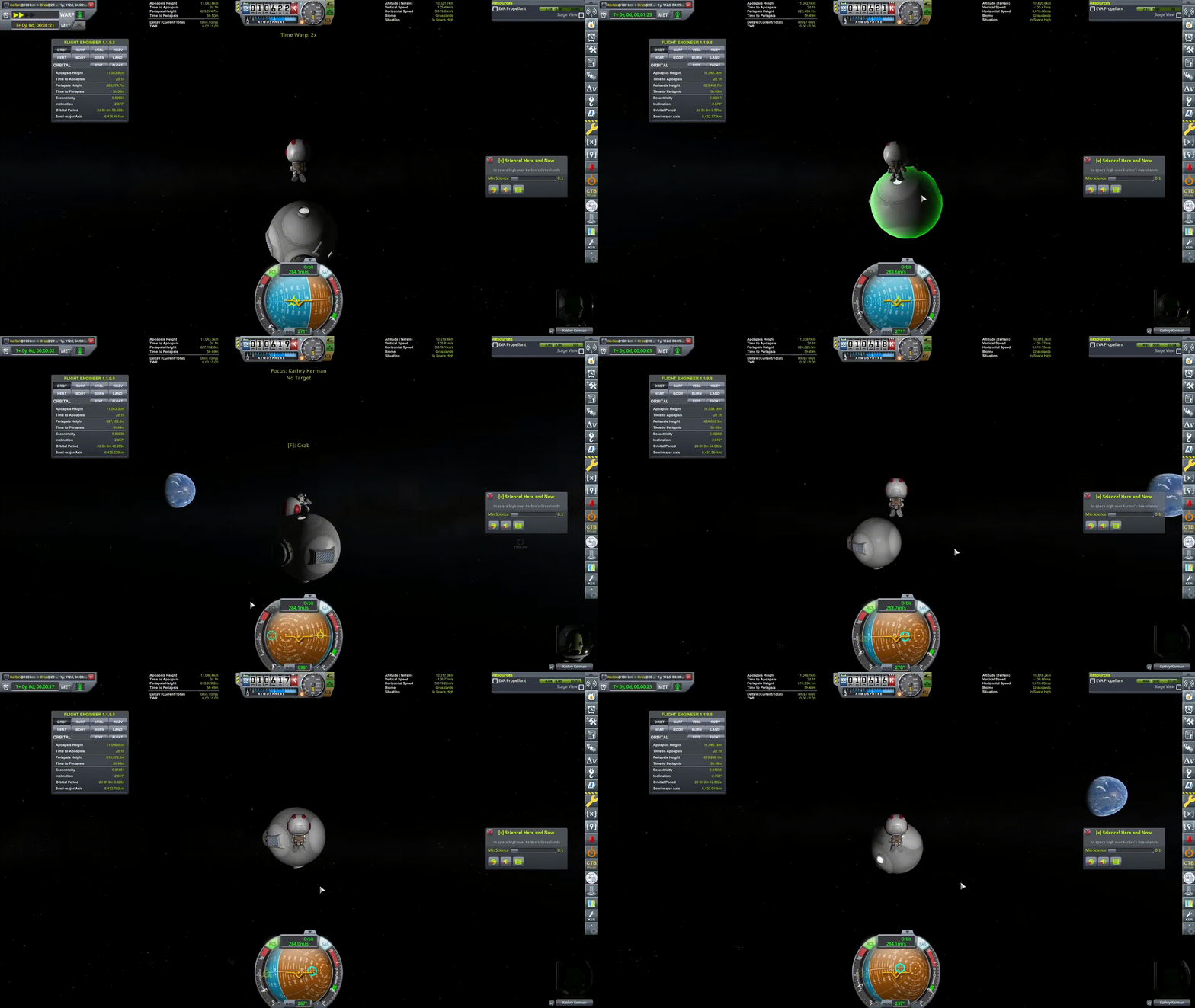
Yes, that means no push of shame (credit)
Prerequisites
I will be assuming good knowledge of calculus and an awareness of Newton’s Laws, linear/angular momentum and energy. As a result, we won’t be discussing these in and of themselves in detail.
Legalese
All artwork and imagery that forms part of this series was originally produced for this purpose by me, unless explicitly noted otherwise, and can be considered Creative Commons BY-NC-SA.
Any doodles or diagrams were drawn on my Remarkable 2 Ink Tablet.
Going Forward
Up first will be a discussion of the different coordinate systems (for both spacial and angle measurements) and reference frames (specifically intertial vs. non-inertial). From there, we will first look at orbital mechanics and then, I’ll see where things takes us!
See you in the next one!